Why Is My AC Making Noise? Buzzing, Hissing & Banging Explained
Your air conditioner is designed to run quietly in the background. So when it starts making strange sounds right as the first real heat wave rolls in, that noise is your system’s way of asking for help. Knowing what each sound means can be the difference between a simple repair and a full system replacement.
Use This as Your AC Sound Guide
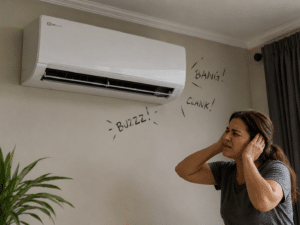
Think of this post as an audio library for your AC unit. Each sound points to a specific type of problem, and some of them require you to act fast. Before diving into the causes, keep one rule in mind: if you ever hear a sound you don’t recognize and your system suddenly stops cooling, turn it off and call a technician. Running a damaged system can turn a fixable issue into a much costlier one.
Buzzing: Electrical or Capacitor Issues
A buzzing noise coming from your AC unit is almost always electrical in nature. This is one of the most common calls technicians receive at the start of summer.
Common causes of an AC making a buzzing noise include:
- Failing capacitor: The capacitor helps start your compressor and fan motors. When it begins to fail, it often produces a buzzing or humming sound before the system struggles to turn on at all.
- Loose wiring or electrical components: Vibrating wires or loose connections inside the unit can create a low buzz that gets louder over time.
- Contactor problems: The contactor is a relay switch that controls power to your system. Wear and debris can cause it to buzz audibly.
Buzzing does not always mean an emergency, but electrical issues should not be ignored. Left alone, they can damage your compressor, which is one of the most expensive components to replace.
Hissing: Possible Refrigerant Leak
A hissing or whistling sound is one you should take seriously. In many cases, it points to a refrigerant leak somewhere in the system.
Refrigerant travels through your AC in a closed loop. When a line develops a crack or a valve begins to fail, the pressurized refrigerant escapes, producing a distinct hissing sound. According to the U.S. Environmental Protection Agency, refrigerant leaks are also an environmental concern and require repair by a certified technician.
Shut your system off if the hissing is loud or accompanied by a drop in cooling. Running an AC low on refrigerant can cause your AC to overheat. This is a situation where quick action protects your investment.
Banging or Clanking: Loose or Broken Parts
A loud banging or clanking noise from your AC unit almost always means something has come loose inside the system. This sound tends to grow louder and more frequent over time as the loose component continues to move.
Possible causes include:
- Loose or broken fan blade: A blade that has come loose will knock against the housing with each rotation.
- Disconnected connecting rod or piston: Inside the compressor, worn components can break free and rattle around, which is a sign the compressor itself may be failing.
- Debris inside the unit: Sticks, leaves, or other material caught in the fan can produce banging sounds that are easy to mistake for mechanical failure.
If you hear banging, turn your system off immediately. A loose part can cause cascading damage inside the unit. Scheduling AC repair before the issue worsens can save you from a much larger bill.
Squealing: Belt or Fan Bearing Wear
A high-pitched squeal or screech often comes from the blower fan inside your air handler. Older systems that use belts can produce this sound when the belt begins to slip or wear out. In newer systems, it more often indicates worn motor bearings.
Squealing is annoying but rarely an emergency on its own. That said, a worn belt left unaddressed will eventually snap, leaving you without cooling entirely. Routine AC maintenance is the best way to catch belt and bearing wear before it becomes a problem.
Which Sounds Require an Immediate Shut-Off?
Not every strange noise requires you to cut power to your system, but some do. Shut your AC off right away if you hear:
- Loud banging or clanking (loose or broken mechanical parts)
- Loud hissing combined with reduced cooling (possible refrigerant leak)
- A high-pitched screech followed by the system stopping on its own
For buzzing or mild squealing, you have a bit more time, but scheduling service promptly is still the right move. The U.S. Department of Energy recommends annual AC tune-ups specifically to catch these issues early.
Get Your AC Checked Before It Gets Worse
If your system is making any of the sounds described here, Dragonfly Heating & Cooling is ready to help. Our technicians diagnose AC noise issues quickly and give you honest answers about what your system needs. Contact Dragonfly Heating & Cooling to schedule a service call before a small problem becomes an expensive repair.
Frequently Asked Questions
Why is my AC making a buzzing noise even though it’s still working?
A buzzing AC that still cools is often a sign of a failing capacitor or a loose electrical component. The system may continue to run for a while, but the underlying issue will likely cause it to fail, sometimes at the worst possible time. Having it inspected sooner rather than later prevents further damage.
Is a hissing sound from my AC dangerous?
A hissing AC can indicate a refrigerant leak, which is both a mechanical and environmental concern. If the hissing is loud or your home stops cooling down, turn the system off and call a technician. Running a system low on refrigerant can destroy the compressor.
Can I keep running my AC if it’s making a banging noise?
No. A banging or clanking sound usually means a component has come loose or broken inside the unit. Continuing to run the system can cause that part to damage other components, turning a single repair into a much more extensive one. Shut it off and call for service.