
Out with the old, in with the fly: Welcome to Dragonfly Heating & Cooling – formerly known as All Pro Air!



Fontana is one of the hottest cities in the Inland Empire, and when your air conditioner gives out in the middle of summer, it’s not just uncomfortable, it’s a real problem. Dragonfly AC & Furnace Repair has been serving Fontana and the surrounding region since 2010, bringing certified technicians, honest assessments, and dependable repairs to homeowners who can’t afford to wait. Whether your system stopped cooling, started making strange sounds, or is running your energy bill through the roof, we’ll find the cause and fix it the right way.
Fontana’s position in the western Inland Empire puts it squarely in the path of some of the region’s most intense heat. The city sits in a broad valley where hot air settles and lingers, and summer temperatures regularly exceed 105 degrees with little relief after sundown. Unlike coastal communities that get some marine layer cooling overnight, Fontana homes hold heat well into the evening, which means AC systems run extended cycles throughout the night and have less time to recover before the next day’s peak.
The city’s housing stock spans several decades, from mid-century ranch homes in older neighborhoods like Southridge and the area near Baseline Avenue, to tract developments built through the 1990s and 2000s in North Fontana. That range means our technicians work on everything from aging equipment approaching the end of its service life to mid-generation systems entering the high-wear years. Dragonfly handles repairs on central air systems, heat pumps, and ductless units, and every job includes a full diagnostic, a clear explanation of findings, and a parts and labor warranty on completed work.
In a city where summer heat is as intense as Fontana’s, the gap between a minor repair and a full system failure can close quickly. These warning signs mean it’s time to call a technician before the situation gets worse.
Fontana’s climate leaves very little margin for a struggling system to catch up on its own. Getting a technician out at the first sign of trouble is almost always less expensive than dealing with the damage a full breakdown can cause.
Fontana carries a legacy of industrial activity that has gradually given way to residential development, but the air quality effects of that history, combined with the region’s natural particulate load from nearby desert terrain and the I-10 and I-15 freight corridors, mean that air filters and condenser coils in Fontana homes clog at an accelerated rate. Homeowners who change filters on a standard quarterly schedule often find their systems are already working against heavy restriction well before that point.
Older homes in the Southridge area and along the southern stretches of the city frequently have original ductwork that was sized for equipment from decades ago. When these homes are fitted with modern replacement systems, airflow mismatches can cause compressors to work under excess load and fail prematurely. In North Fontana, where newer subdivisions were built rapidly during the early 2000s housing boom, builder-grade equipment is now aging into the zone where capacitors, contactors, and blower motors begin to fail in clusters. Our technicians understand this range of conditions and approach each home with the specific context of its age and location in mind.
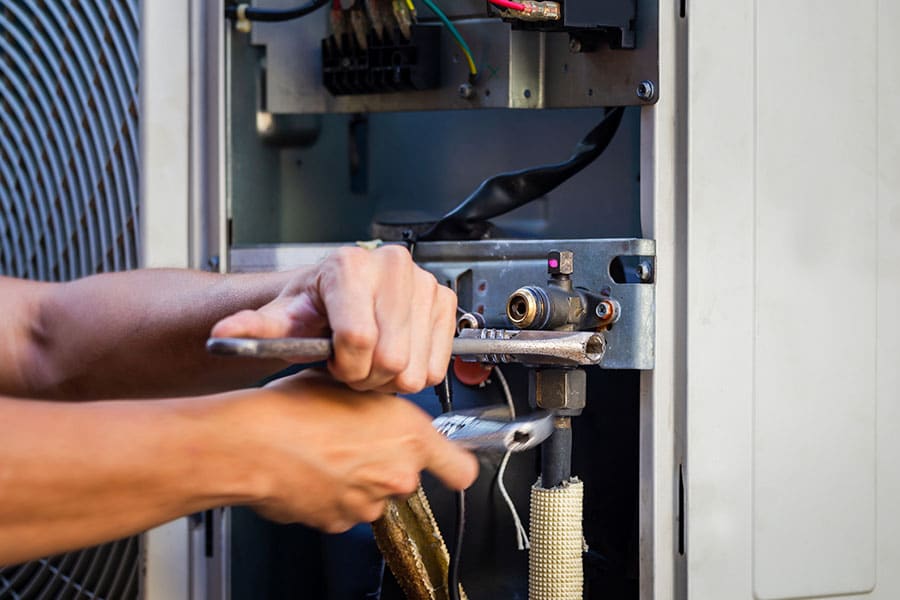
A homeowner in Fontana’s Citrus Heights neighborhood called Dragonfly on a Friday afternoon after spending two days trying to get by with box fans while her AC blew nothing but warm air. Sandra had assumed the problem was low refrigerant and expected a quick recharge would solve it, but when our technician arrived and ran a full diagnostic, the picture was more specific. The condenser fan motor had failed, causing the outdoor unit to overheat and trip its internal protection cutout repeatedly. The refrigerant charge was actually fine. The technician replaced the motor, cleared a significant buildup of debris from the condenser coil that had been contributing to heat retention, and cycled the system through a full test before leaving. Sandra mentioned she’d noticed the unit sounding different for a few weeks before it stopped cooling entirely, which is almost always the early signal of a motor that’s beginning to go. The repair was straightforward once the right diagnosis was made, and the system was running normally before the weekend was over.

Fontana homeowners need a company that shows up prepared, gives straight answers, and does the job correctly the first time. That’s exactly what Dragonfly brings to every service call.
We’ve built our reputation in this region by treating every home like it matters, because it does. When the heat in Fontana is at its worst, you deserve a company you can actually count on.
Yes, we offer same-day and emergency service for Fontana homeowners. Calling in the morning gives you the best chance of getting a technician out that day, especially during peak summer months.
Components like capacitors, contactors, and fan motors often fail without obvious warning after years of cumulative wear. Fontana’s long, intense cooling season accelerates that wear, so a system that performed adequately last year may have crossed a threshold by this one. A diagnostic visit will identify exactly what changed.
Given Fontana’s air quality and particulate levels from both regional dust and nearby freight traffic, checking your filter every four to six weeks during summer is a reasonable habit. If it looks heavily loaded, change it regardless of how recently you replaced it. A clogged filter is one of the most common contributors to AC problems we see in this area.
Extended run times are common during peak heat, but a system that runs all day without ever reaching your thermostat setpoint is not operating normally. That pattern usually points to an underlying issue such as low refrigerant, a dirty coil, or a component that’s losing efficiency. It’s worth having a technician take a look.
Minor issues rarely stay minor in Fontana’s heat. A failing capacitor, for example, puts additional strain on the compressor, and a compressor replacement is significantly more expensive than catching the capacitor early. We always recommend addressing problems as soon as you notice them rather than waiting to see if they resolve on their own.
"*" indicates required fields
“*” indicates required fields