
Out with the old, in with the fly: Welcome to Dragonfly Heating & Cooling - formerly known as All Pro Air!

Author: Dragonfly

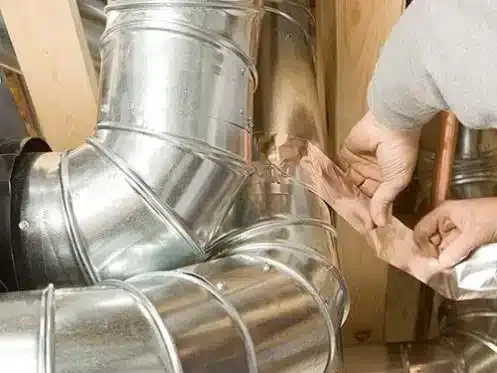
8 Signs You Should Replace Your Ductwork in Your Riverside, CA Home

One of the most vital systems in your home is the HVAC unit. The air ducts determine how well this system functions because they transport warm air into cold rooms and cool air when the temperatures are above normal. Unfortunately, these ducts are liable to wear out after some time, resulting in a very uncomfortable home. To avoid this, here are some of the things you should watch out for to determine if your ductworks need replacement.

1. THE PERIOD OF TIME IT HAS BEEN IN USE

Damage caused by aging is inevitable. When your ductwork is transporting hot air, it will expand due to the heat. Similarly, it contracts when transporting cold air. This repeated contraction and expansion alone is enough to make it grow old and brittle, which could ultimately lead to holes, gaps, and cracks on its body.

A duct system that has been maintained well over its years in use will last for approximately 10 to 20 years. Good maintenance involves regular inspections, cleaning, and repairing damages immediately they occur. Failure to do either of these will fasten the damage process of your ductwork. However, the basic rule of thumb is replacing your ductwork after every 15 years of use. Don’t wait until it’s totally worn out.

2. WHEN YOU NOTICE THE PRESENCE OF MOLD

Mold infestation is one of the major complaints in homes. You can find them anywhere in your home, such as your pool, bathroom, basement, wall, including your ductwork. Molds spores can be carried in the air; therefore, when your unit sucks in air to warm it up or cool it, mold finds a way to get into your ductwork. For mold to form a colony, it will need water and food. Water droplets that accumulate inside the ducts are plenty enough for mold to flourish. And they will use dirt, dead skin cells, and dead insects trapped inside as their source of food.

Mold infestation in your duct is hazardous because it puts you and your entire family at a health risk. Breathing in the spores will cause headaches, breathing problems, skin irritation, itchy eyes, nasal congestion, sneezing, coughing, and other allergy-related symptoms that only get worse with time. You can detect mold visible or by their odor. Usually, they appear white, black, or green and produce a strong, musty odor.

3. VISIBLE DAMAGES

You can also spot physical damages on your ducts by visually inspecting them. You will often find that the segments that run through your garage or attic are prone to damages. The situation gets worse when you are used to storing things on top or exposed parts of the ducts. Continuous storage will make the duct brittle and could eventually collapse or crush.

Also, duct segments near sections of your house that were recently renovated are liable for damages. Dent on the duct could restrict airflow, or they start to leak. Of course, you can repair small damages. However, if it is too much, you should replace the entire ductwork.

4. INEFFECTIVE DESIGN

If your ducts were installed over a decade ago, chances are their design is outdated and could be either causing you huge bills or doesn’t cool or warm your house as required. Old ductworks have major design flaws. You will find some of them with improper insulation, unnecessary twists and kinks, or uneven heating and cooling in your home.

Ductwork with sharp bends impedes the flow of air from reaching the vents. If the size is too large, your HVAC unit will fail to heat or cool the air indoors adequately. And if the distance between the delivery event and the HVAC unit is too long, there will be heavy energy losses, and you will be giving the HVAC unit too much work. Dragonfly Heating & Cooling can help you in building a great design that is both effective and energy-efficient.

5. DECLINING AIR QUALITY

Indoor air quality is affected by multiple parts of the entire HVAC system. However, ducts are the major culprit. Dust particles, pollen, and pet dander will often get trapped inside the ducts. So even after changing your filters, the air flowing through the ducts will pick up these particles and spread them in all your rooms. Also, as mentioned earlier, pollen and dust particles provide perfect conditions for mold to grow and spread in the duct. The bigger they get, the worse the indoor air quality becomes.

Moreover, leaky ducts can pick up particles and distribute them throughout your house. So, if a dead rat or possum is lying close to your home, or any other foul-smelling things, the filtration system won’t be able to freshen that air. Bad odors can also be caused by back-drafting. This is when a leaky duct causes the reversal of the ordinary direction of airflow. Carbon monoxide from combustion appliances will be sent to your rooms. You should call for help immediately when this happens because continuous exposure to carbon monoxide can cause serious health problems.

6. INCREASING ELECTRICITY BILLS

Any problem with your duct always translates to the bills you pay. For example, a poorly designed duct system will overwork the HVAC unit, leading to high energy requirements. Also, if air is leaking, the thermostat will force the system to work harder to heat or cool the house, leading to high energy consumption.

You should take note of the amount of money that you pay monthly for electricity bills. When you notice a sudden rise, then something is spending more energy than it is supposed to. You can contact Dragonfly Heating & Cooling to inspect the source of the spike. The source of the problem could be your other electronics or parts of your HVAC system besides the duct.

7. PEST INFESTATION

During the cold nights of winter, or the extremely high temperatures in summer, pests will often look for a comfortable place to shelter, and for most of them, your duct is the perfect spot. It has perfect temperatures despite the conditions outside. They are undisturbed and dark—exactly what pets are looking for. If there is a leak somewhere in the duct, pets will crawl through, causing blockages in your duct systems. Some may even fail to find their way out and end up dying, causing awful smells that are very difficult or almost impossible to locate the source. Other problems with pests include weird noises in the house and the spread of bacteria and microbes that you have no idea where it came from.

Do a thorough inspection of your ductwork to see if there are holes that can allow pests. Also, cover your vents with a mesh that will prevent any animal from getting in. if the damages appear too server for repairs, then it is time to replace your ductwork. Consult with us if you need any professional help.

8. WHEN MAKING UPGRADES

If you are installing a new air conditioner or furnace, some parts or the entire ductwork system may require replacement or adjustment. This is particularly common if you are getting a new model that is not compatible with your current duct system.

If you have any problems with your duct, either repair or replace it immediately. Postponing the process will only lead to more serious problems, including serious health issues. Our technicians are qualified to give you tailored solutions to any type of problem you are facing. Call Dragonfly Heating & Cooling of Riverside, CA, today to inspect, repair, or replace your duct system.
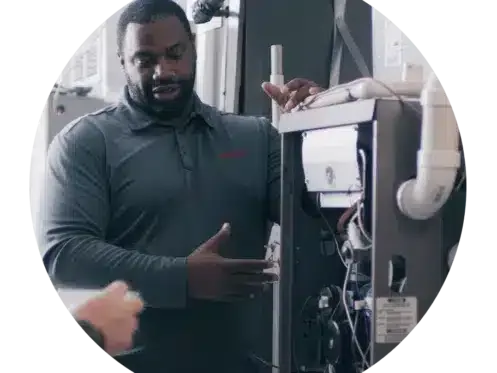
What You Should Expect During A Furnace Maintenance Appointment in Riverside, CA

Seasonal furnace maintenance is the most important step you can take toward maximizing the life of your heating system and lowering the total cost of ownership. In fact, most furnace warranties require maintenance by a licensed HVAC technician less the coverage be voided. The good news is that a furnace tune-up is relatively inexpensive within the grand scheme of home upkeep, and many heating companies offer maintenance plans that can help you lower your costs even more. With all of this in mind, let us explore what you can expect when you schedule a furnace maintenance appointment with Dragonfly Heating & Cooling.

INSPECTION

Your heating technician will perform a comprehensive inspection of your furnace unit and all ancillary equipment. This includes a visual inspection but also a point-by-point inspection, and if you request it, most HVAC companies will provide you a sheet that breaks down what their multipoint inspection entails. It is also worth noting that the inspection is not necessarily separate from the cleaning, tune-up, and lubrication, but we break it down this way to give you an idea of where the emphases are. The focal points of the inspection are to ensure that equipment is operating within optimal ranges and to identify any wear and tear that needs to be corrected along with any more serious damage to the system.

CLEANING

Furnaces get dirty and need to be cleaned. Consider that when your HVAC technician arrives for a furnace tune-up in early fall, your furnace has been run during the previous autumn and winter. It has also sat idle during the previous spring and summer. That means that there is a lot of dust on various aspects of the equipment, and there can be other accumulation on various parts as well. Your technician will vacuum dust and the like and used specialized cleaners to remove more stubborn grime.

TUNE-UP

Tune-up is a broad term borrowed from the automotive world. There are moving parts in a furnace. There are also vibrations. Your technicians will check all fittings and tighten them as necessary. Electrical connections need to be checked and tightened as well. Fittings, bearings, wires and so forth may need to be replaced if there are signs of wear. Belts are a focal point during this process as well. They often need to be tightened and otherwise adjusted and may need to be replaced if too worn. This is also the phase during which the tech will test pressure, amperage and so forth to ensure optimal ranges.

LUBRICATION

All the moving parts in a furnace system receive some form of lubricant oil. This lubricant reduces friction, which thus reduces vibration, heat and wear and tear. Some parts are lubricated directly. In other cases, there are lubricant ports that are used to fill reservoirs. These reservoirs allow the system to provide more lubrication to those components over time. Lubrication is a simple thing but also essential to maximizing furnace lifespan and avoiding more serious repairs down the line.

FURNACE UNIT

The most important aspect of your furnace unit is the heat exchanger. This is also the most expensive component of the system, and should it need to be replaced, it is often advisable to replace the entire unit instead. Your technician will use a specialized chemical to remove scaling from the heat exchanger. During this process, he or she will also look for signs of corrosion or any cracks.

ELECTRIC VS. GAS OR OIL

An electric furnace has a control board that needs to be cleaned, inspected, and tested. A tune-up for a furnace that burns natural gas or heating oil is a bit more involved. The fuel line must be examined for potential leaks. The technician will have to clean and test the burner along with the pilot and thermocouple. It is also necessary to ensure that the gas pressure is appropriate for the system.

VENTILATION SYSTEM

Your maintenance technician will also inspect the ventilation system as it pertains to the furnace. This includes the air handler, which has belts, bearings, and other moving parts. The technician will also check that all registers and vents are clean and in working order. If any HVAC filters need replacement or cleaning, that will usually be done as well. Note that ductwork inspection and cleaning can be scheduled at this time as well but is not included because it does not have to be done as often.

THERMOSTAT

During the tune-up, the technician will remove the face of the thermostat to clean behind it and test the connections. He or she will then test it to ensure that the device is in working order. Sometimes, the calibration will be out of whack, in which case the technician will recalibrate it.

CONDENSATE LINE

Furnace maintenance will also include checking the condensate line. The technician will ensure that the line is properly oriented and that there is no obstruction. If there is an obstruction, then the maintenance will include clearing the line so that condensation can leave the home freely.

STARTING THE SYSTEM

After everything has been cleaned, inspected, lubricated, tested, and double-checked, it is time to start up the system. While the system is running, your technician may go back to the furnace and air handler to ensure that everything looks, sounds, and smells in order. The technician will then check the airflow from the vents in the various sections of the home to ensure that the air pressure is correct. He will ensure that the temperature of the air from the vents is also the correct temperature as set on the thermostat.

CARBON MONOXIDE LEVELS

If you have a furnace that uses natural gas or heating oil, there is the potential for carbon monoxide levels. Your technician will test these levels. The technician will also examine your carbon monoxide detectors to ensure that the devices are working and calibrated and that they are positioned appropriately throughout the home.

CUSTOMER CONSULTATION

When the furnace maintenance has been completed, the technician will provide you with signed and stamped paperwork. This paperwork details all the work that has been performed on the system, and this is the documentation that you want to keep with your records. Should you ever need to make an HVAC warranty claim, you may need this documentation as proof.

Your technician will also take the time to explain all that he or she has done. The technician will discuss the wear and tear corrected and what you may have to watch for in the future. This is also an excellent opportunity for you to ask any questions about the maintenance or your heating system in general.

YOUR FURNACE MAINTENANCE PROS IN RIVERSIDE

Dragonfly Heating & Cooling has served Riverside and the neighboring communities since 2010. That means that we have more than a decade of experience keeping local furnaces and other heating equipment running well. We perform tune-ups for both heating and cooling systems and offer maintenance plans. We offer two levels of maintenance plans that will provide additional cost savings and benefits. You can also count on us to install and repair both ducted and ductless cooling and heating systems. If you have any questions or would like to schedule an appointment, call us, or contact us online today.

Schedule Service

"*" indicates required fields

This field is for validation purposes and should be left unchanged.
Are you a new customer?*

By clicking “Send Message”, I am providing express written consent to receive autodialed and pre-recorded calls, texts, and SMS/MMS with marketing communications from Dragonfly Heating and Cooling regarding home services at the phone number provided above, even if the number is on a corporate, state, or national Do Not Call list. Consent is not a condition to purchase services or products.