Out with the old, in with the fly: Welcome to Dragonfly Heating & Cooling - formerly known as All Pro Air!

Author: Dragonfly

Benefits Of Spring AC Maintenance in Riverside, CA.

As we wave goodbye to the winter season, it is important to ensure your home is ready for the spring and summer temperatures. Many freshen up the exterior of their homes and deep clean the inside to welcome the new season. However, be sure to not forget about your air conditioner on your spring to-do list! The California sun can create a large workload for your air conditioning system, which is why it needs to be properly prepared and cared for. Spring AC maintenance can provide a variety of benefits for your home and ensure your comfort remains all summer long. In this blog, we discuss the details of AC maintenance in Riverside, CA and the advantages the service can provide.

Why Is Spring Maintenance Important?

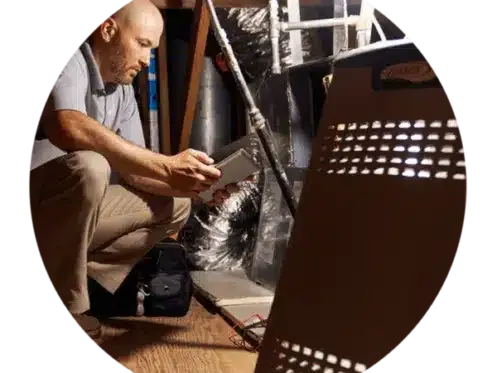
Many homeowners wonder if air conditioning maintenance is necessary each spring. When you schedule AC maintenance in Corona, California and surrounding areas, a Dragonfly technician will thoroughly inspect each component of your air conditioner. It can be difficult to identify when your AC system needs repair until the unit breaks down. Your technician can identify a problem and perform its needed repair to prevent future issues from arising. AC maintenance is essentially a preventative service to avoid an uncomfortable and costly repair or breakdown in the middle of a California summer. Scheduling maintenance in the spring ensures your air conditioner is properly prepared and ready to provide cool air for your home the moment you need it. To answer the common homeowner question: Yes, spring AC maintenance is necessary each spring season!

What Is Included In AC Maintenance?

At Dragonfly Heating and Air, we offer many different services for all types of air conditioners. Specific maintenance services depend on the type of air conditioning unit your home utilizes. However, our expert technicians perform the following tasks at each maintenance service:

  • Calibrate thermostat
  • Confirm electrical connections
  • Lubricate all moving parts
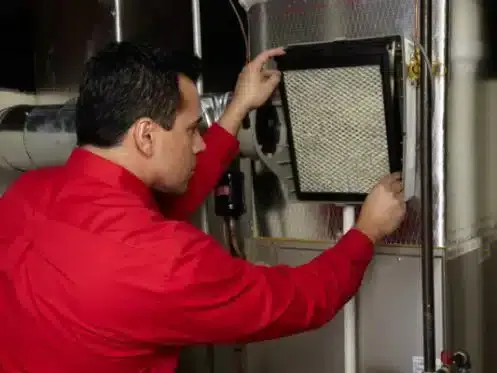
  • Change air filters
  • Inspect drain line
  • Clean coils
  • Check refrigerant levels
  • And more!

How AC Maintenance Can Benefit Your Home

With the warm temperatures we see here in Riverside, it is important to have a properly working air conditioning system. Scheduling spring maintenance ensures there are no underlying issues that will lead to an uncomfortable breakdown or costly repair. Along with preventing future issues, spring maintenance can provide a variety of other benefits. Below we have listed 5 of the many advantages that come with scheduling AC maintenance with a Dragonfly technician.

  • Lengthen Lifespan
  • Lower Energy Costs
  • Fewer Repairs
  • Improve Air Quality
  • Peace Of Mind

Lengthen Lifespan

The average air conditioner lasts 15-20 years if well maintained. Air conditioning units are complex systems with various different components working together to effectively cool your home. If one component malfunctions, it can affect the whole system and lead to a breakdown. Over time, constant malfunctions can expose components to wear and tear and decrease the unit’s lifespan. Regular air conditioning maintenance catches underlying problems and repairs them before they damage other components.

Lower Energy Costs

If your air conditioner has an underlying malfunction, it is using more energy to effectively cool your home. The more energy the unit uses, the higher your monthly utility bills will be. Spring maintenance allows a Dragonfly technician to improve your AC unit’s overall efficiency and keep your monthly costs to a minimum!

Fewer Repairs

As most locals know, California summers can be hot and humid. A homeowner’s worst nightmare would be to experience no air conditioning during a heat wave due to an unexpected breakdown. Scheduling spring AC maintenance allows a technician to identify problems ahead of time and prevent future repairs. You can enjoy your summer without having to worry about many air conditioning repairs in Riverside, CA with preventive AC maintenance.

Improve Air Quality

A Dragonfly technician will perform many tasks to improve your home’s air quality during AC maintenance. Outdoor air conditioning units can collect debris and other small particles, which can find its way into your home from time to time. It is important to have a technician thoroughly clean your AC unit at the beginning of the season to ensure you are breathing in clean air. Additionally, a Dragonfly technician will change each air filter in your home to ensure it is ready to catch allergens for the next 3 months.

Peace Of Mind

Many homeowners enjoy summer by vacationing and relaxing. Your air conditioner is the last thing on your mind when experiencing the various activities of the summer season. However, your peace is disrupted if your air conditioning unit suddenly breaks down and leaves your home uncomfortably warm. Scheduling AC maintenance can help avoid situations such as these and maintain a peace of mind that your air conditioner is functioning efficiently and effectively.

Constantly keeping your home at a cool and comfortable temperature can present a large workload for your air conditioner, which is why the unit needs to be properly prepared! Much like your car, your air conditioning unit needs to be serviced by a professional each year. Let the experts at Dragonfly Heating and Air keep your AC unit working smoothly this summer with our AC maintenance services in Riverside, CA and surrounding areas!
10 Common AC Problems You Should Know About

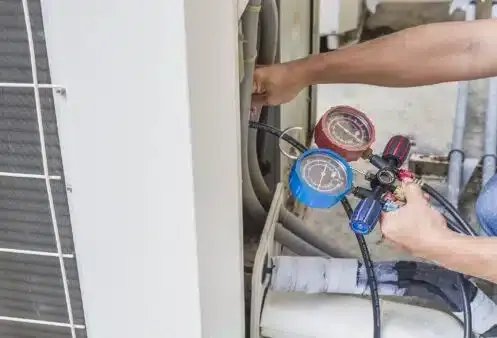
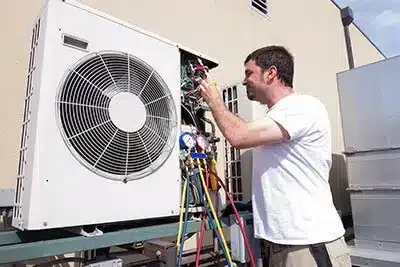
Air conditioning is an essential feature of most modern homes, providing a comfortable indoor climate in hot weather. However, it can be frustrating when it malfunctions or doesn’t work as expected. Understanding common air conditioning problems can help you identify issues and prevent them from becoming more severe. Here are 10 air conditioning problems you should know about.

1. NOT BLOWING COLD AIR

If you are experiencing a lack of cool air from your air conditioner, a few underlying issues could be the cause. You could have a low refrigerant level in the AC unit, possibly due to a refrigerant line leakage. Alternatively, a malfunctioning compressor could be the culprit. This can result from a blown a fuse or a defective electrical switch. If your air conditioner’s compressor isn’t operational, it won’t be able to properly circulate the refrigerant, resulting in a lack of cold air production.

Another potential issue could be that the evaporator coil in the AC is frozen; this can occur if the air filter is clogged or if the airflow around the evaporator coil is blocked. If the evaporator coil is frozen, it won’t be able to absorb heat from the air, thus preventing the AC from producing cold air.

2. LEAKING

Maintaining an air conditioner is essential to ensure it functions appropriately and prevents leaks. Clogging of the drain pan, which collects water removed from the air, is one of the most common causes of an air conditioner leak. If the drain pan is not regularly emptied, the water can overflow and begin to spill out.

Failure of the condensate pump is another cause of an air conditioning system leaking water. The condensate pump helps to get rid of water from the drain pan, and if it fails, the water will accumulate and eventually cause a leak. In some cases, a defective condensate pump can also lead to water backing up into your home, which can cause severe damage. If you spot your AC unit leaking water, get it serviced by a certified technician immediately.

3. TRIPPING THE CIRCUIT BREAKER

A circuit breaker is a safety device that trips when there is an overload of current in an electrical circuit. This prevents damage to the electrical system and keeps you from being electrocuted. If your AC trips the circuit breaker, too much current is running through the system. Several things, including a faulty compressor, a shortage in the wiring, or a problem with the air conditioner itself, can cause the tripping of a circuit breaker. If you suspect this is the problem, it’s recommended to call a qualified technician to come and take a look at it.

4. UNUSUAL ODOR COMING FROM THE UNIT

If you notice an unusual odor coming from your air conditioning unit, it could be a sign of a problem. The most common cause is a buildup of dirt and debris in the system. Other causes of an unusual odor from your air conditioner include:

  • Dirty coils
  • Leaking refrigerant
  • Mold or mildew growth

It’s essential to have any strange odor your air conditioner may emit checked out by a professional, even if the unit functions correctly in all other ways.

5. THERMOSTAT MALFUNCTION

Thermostat malfunction is a common issue among air conditioning systems. This can result in the temperature of the air conditioning system remaining higher than expected, making it difficult to cool the room. This sort of malfunction could be due to several causes, including a faulty thermostat, a malfunctioning air conditioner, or a lack of power to the thermostat.

If the thermostat is not working as it should, it is important to have it checked by a qualified technician to determine the reason. Sometimes, you may need to replace the thermostat or service the air conditioner. If the thermostat works correctly, you may need to adjust the temperature settings to a lower level. Once the thermostat is back to normal, the air conditioning system should return to its average temperature.

6. AC UNIT DOESN’T TURN ON

If your air conditioner is not functioning at all, there are a few potential issues you should look into. Begin by confirming that the electrical plug is connected and the power switch is on. After that, inspect your home’s circuit breaker or fuse box to ensure that the circuit for your air conditioner has not been tripped or blown. If it has, seek help from a certified HVAC technician.

7. CLOGGED AIR FILTER

A clogged air filter can cause a range of problems with your air conditioning equipment, including reduced airflow and circulation. A clogged air filter will reduce the amount of air that moves through the system and cause the compressor to work harder, reducing its efficiency and increasing the energy used to cool your home. It can also cause the evaporator coil to freeze, potentially leading to ice buildup.

In addition, a clogged air filter can lead to poor air quality in your home, as airborne pollutants are not properly filtered out. It is important to regularly change your air filter to ensure that your air conditioning system is working optimally and providing the best air quality possible.

8. FAULTY COMPRESSOR

The compressor is responsible for pumping refrigerant throughout the AC system, and if it fails, the entire system can shut down. Various issues, including a defective start capacitor, a bad motor, a clogged condenser, or a lack of lubrication, can cause a compressor failure. If the compressor is malfunctioning, it’s best to call a professional to inspect and fix the issue. Without the proper repair, the system may not be able to cool your home sufficiently, leading to more costly repairs in the future.

9. FAN PROBLEMS

Fan problems can range from a simple obstruction of the fan blades to a more serious electrical failure. One of the most common fan problems is a blockage or interference with the blades, which can cause the fan to be noisy and not move air as efficiently.

Another frequent issue is overheating, which can occur when the fan runs for extended periods. In addition, a damaged or worn-out motor can cause the fan to become unresponsive or to stop running altogether. It is important to check that the fan is connected to a properly grounded outlet to avoid the risk of electric shock. If any of these issues are present, it is best to call a professional to inspect and repair the fan.

10. FROZEN EVAPORATOR COIL

A frozen evaporator coil can be a serious issue for air conditioning units. Freezing happens when the evaporator coil cannot absorb enough heat from the air passing over it, causing it to freeze up. This can lead to a number of problems, including a decrease in cooling efficiency, water leaking onto the floor, and eventual system failure. To prevent this issue, it is important to keep the evaporator coil clean and free of debris. This will help ensure that the air can pass over it unimpeded and reduce the risk of freezing up.

At Dragonfly Heating & Cooling in Riverside, we understand how important it is to keep your AC system running smoothly and efficiently. That’s why we offer a wide range of services, including AC repair, installation, and maintenance, to ensure your system functions at its best. We also provide heating installation, repair, and maintenance. Call us at Dragonfly Heating & Cooling today for more information.

Things That Need To Be Part of Any Tune-Up Checklist

Getting an HVAC tune-up is a crucial maintenance step for keeping your air conditioning and heating systems operating proficiently year-round. One does not approach the process only when a problem arises; a tune-up can help prevent expensive breakdowns in the first place. It can also save you money by keeping everything running at peak efficiency. While each system is different, there are things that any HVAC tune-up checklist should include.

START WITH CARBON MONOXIDE TESTING

Safety should be the top priority, so a tune-up checklist needs to include combustion testing of your furnace. A fuel-fired furnace does not spend all its gas during operation and releases some of that fuel as carbon monoxide (CO). Inspecting the level of CO released while the furnace is running can tell you if it is wasting too much gas.

Trained personnel can inspect the furnace with equipment once temperatures in the system stabilize and at each heat exchanger cell. That will help keep your furnace running efficiently and prevent unwanted CO buildup that could endanger everyone in the home.

TEST ALL HVAC SAFETY EQUIPMENT

Inspecting your HVAC’s safety equipment to verify it is working is another crucial step on every tune-up checklist. This equipment includes gas shut-off valves and the limit switch that keeps temperatures from climbing too high around the combustion chamber. The air pressure switch, carbon monoxide detectors, and mercury flame sensors or thermocouples that help with pilot light safety will be checked as well.

Our technicians will check safety equipment to make sure it operates as intended. They will identify potential issues and help to correct them. This safety equipment protects your family, home, and HVAC system from wear and potential hazards.

CHECK BURNERS AND CLEAN THEM IF NEEDED

The burner plays an integral part in your heating system by mixing air and natural gas to produce the flame that heats your home. Dirt and other debris can cause burners to operate poorly, and connection or valve issues could develop over time.

Technicians check the flame to verify it is burning blue and evenly across the burner, cleaning it if needed. Connections might work loose and require reattachment or replacement. Properly functioning burners are cost-effective, produce adequate heat, and produce minimal carbon monoxide, no matter if the furnace is running or off.

CHANGING AND CLEANING FILTER MEDIA

A clean filter can stop dust, pet dander, pollen, and other small particles from circulating throughout the air column in your home. Those particles become trapped in the filter media and clog it over time. A dirty filter is less efficient at keeping the air clean and can restrict airflow through your HVAC system.

No tune-up checklist would be complete without checking, cleaning, or replacing the filters. Disposable filters need to be changed every three months. Permanent filter systems can be cleaned and reused. Our technicians will inspect your filters to help keep the air you breathe clean.

EXAMINING THE DUCTWORK

Your system’s ductwork moves air from your air conditioner, furnace, and ventilation pipes throughout your home. This integral part of your HVAC system can become filled with debris or become damaged. That leads to reduced air circulation and poor air quality.

A tune-up checklist should include examining the airflow through your HVAC’s ductwork. A technician can look for signs of dirty air flowing out of a
vent, limited airflow, rooms with different temperatures, or signs of vent damage near seams. You may need to have the ducts cleaned, patched, or resealed along seams to fix the problem.

VERIFYING THE THERMOSTAT IS WORKING PROPERLY

Your HVAC thermostat is the brain, sensing the air temperature and turning your air conditioner or furnace on and off when needed. A tune-up list should include inspecting the thermostat to verify it is sensing the proper air temperature and that all connections are secure.

Trained professionals can examine your HVAC system to verify the thermostat is kicking on your air conditioner or furnace when adjusted to various temperature ranges. That includes short cycling when your HVAC shuts down before full cooling/heating cycles are complete. A tune-up can also help you set programable thermostats to match your schedule and needs.

CHECKING THE SYSTEMS CONTACTORS AND RELAYS

Your HVAC contactors and relays open and close circuits, controlling electrical flow to your system’s components. That flow is what turns equipment on and off. Signs these components are not working include inconsistent operation, noises like chattering or humming sounds, and signs of charring or melting.

Our technicians can inspect these components using specialized equipment like multimeters. They can isolate and test these parts, replacing them if they do not close or open correctly. This tune-up step will allow your HVAC system to produce consistent temperatures in your home and help equipment shut down or start up properly.

CLEAN AND FLUSH DRAIN LINE AND TRAP

The HVAC system requires a condensate drain and trap to prevent the air from the system from escaping. It prevents conditioned air from blowing outside in a positive pressure system. When attached to a negative pressure system, it stops condensation from pooling in the air handler.

Our personnel can inspect the air conditioner drain tube to check that it is not blocked and unclog it if needed. That can prevent overflow at the condensate plate and stop algae growth and other debris from creating a block. They can also verify water is flowing correctly at the trap.

CHECKING THE AIR CONDITIONER REFRIGERANT LEVELS

Your HVAC system needs to maintain a proper level of the chemical compound used to absorb heat and provide cool air after running through compressors and evaporators. Low levels of this refrigerant make your air conditioner lose its ability to transfer heat, resulting in warm air circulating within your home. Our trained technicians can inspect and handle these chemicals in a safe and environmentally friendly manner, keeping your HVAC running cool.

ADJUST BELTS AND LUBRICATE MOVING PARTS

HVAC belts connect components like the motor pulley to the blower wheel pulley, helping push air throughout the ductwork. Adjusting these to the proper tension should be standard during a tune-up to prevent slippage and belt deterioration. Motor bearings and other moving parts require lubrication to reduce friction and reduce wear and tear on these parts. Regular lubrication can also reduce the amount of corrosion and heat buildup that affects sensitive components.

WE PROVIDE TUNE-UPS AND MORE

We can provide all your tune-up needs in Riverside and the surrounding area. From annual HVAC maintenance to getting your air conditioning ready for summer’s heat or your furnace set to handle the winter cold, we can help. Some of the other services our company provides include:

  • AC installation
  • AC repair
  • Heating installation
  • Heating repair
  • Ductless mini-split services
  • Indoor air quality solutions
  • Maintenance plans
  • Smart thermostats

We have provided professional work for homeowners in Orange County and the Inland Empire area since 2010. Discover how our customer service and HVAC expertise stand out from others. Contact Dragonfly Heating & Cooling today for more information.

What It Means When Your Thermostat Is In Recovery Mode

Have you ever noticed that your thermostat shows that it’s in recovery mode and wondered what this means? Recovery mode is a special feature found on newer programmable thermostats that is designed to help improve home comfort. In most cases, recovery mode is nothing to worry about and simply shows that your HVAC system is now running to raise or lower your home’s temperature. However, there are also times when it can indicate that there is some issue with your thermostat or HVAC system. For this reason, today we’re going to focus on what recovery mode is and how it works to help you know when it is a sign of a problem.

HOW OLDER PROGRAMMABLE THERMOSTATS WORK

Any programmable thermostat can help to lower your heating and cooling costs by enabling you to set the desired temperature higher or lower at certain times of the day. For instance, if no one is home during the day, you can raise or lower the temperature so that your furnace or air conditioner will rarely or potentially never run while you’re away. You can then program the thermostat so that your heating or AC comes back on to warm or cool your home before you get back home.

Recovery mode is a fairly new feature that isn’t found on most older programmable thermostats. With these thermostats, the time that you have it set for the temperature to raise or lower is the time that your heating or air conditioning will turn on.

Let’s say that you have the thermostat programmed to turn the heat down to 60 degrees when you go to bed and then turn it back up to 70 degrees at 6 in the morning. If you wake up at 6, then your home will still only be 60 degrees as this is the time when your thermostat will signal the furnace to run and start heating your home back up.

It will often take close to an hour for your heating system to raise your home’s temperature by 10 degrees, and it could even take two hours on extremely cold days. This means that if you want your home to already be at 70 degrees when you wake up, you would typically need to program the thermostat so that it increases the temperature at 5 or even 4 a.m.

HOW RECOVERY MODE WORKS ON A NEWER PROGRAMMABLE THERMOSTAT

Programmable thermostats with recovery mode work differently so that the temperature is already where it should be at the time you have the unit programmed for. This means that you wouldn’t need to worry about programming the thermostat so that your heating system turns on earlier in the morning as recovery mode will work to ensure your home is already at 70 degrees when you wake up.

When your thermostat shows it is in recovery mode, it simply means that it has already signaled your furnace or AC to run and is beginning to raise or lower your home’s temperature. In most cases, the thermostat will enter recovery mode and start heating or cooling around an hour before the time the temperature is set to increase or decrease.

Recovery mode is a great feature that takes the guesswork out of programming your thermostat as it will work to ensure that your home is already at the desired temperature when you wake up in the morning and get back from work in the evening. Once the temperature reaches the thermostat setting, the thermostat will then exit out of recovery mode and your system will then run normally.

HOW TO KNOW WHEN RECOVERY MODE IS A SIGN OF A PROBLEM

Seeing your thermostat in recovery mode is generally nothing you need to worry about as it simply means that your HVAC system is beginning to bring the temperature back up or down. However, your thermostat should only ever enter recovery mode an hour or two before the temperature is programmed to change. If you see that your thermostat shows it is in recovery mode any other time than this, then it usually indicates that there is some problem with either the thermostat itself or your heating or cooling system.

Let’s again say that you have the thermostat programmed so that the temperature is raised to 70 degrees at 6 a.m. In this case, the thermostat should already have exited out of recovery mode and switched back to normal before you wake up. If the thermostat is still in recovery mode when you wake up, it means that your heating system is still running as the temperature hasn’t yet reached 70 degrees. In this situation, you can be fairly certain that there is some issue that is limiting the effectiveness of your heating system and causing it to produce less hot air.

The same situation can also occur during the summer when you’re using your air conditioning. If you have the thermostat set to switch to a lower temperature during the summer and your thermostat is still in recovery mode after the time the temperature was set to change then it indicates that your AC isn’t working effectively.

In either case, the first thing you should do is check to make sure your HVAC air filter isn’t dirty. A dirty air filter will restrict how much air is brought into the system. This leads to the system producing much less heat or cooling, meaning that it will take much longer for it to raise or lower the temperature. If the air filter isn’t dirty, you will then need to have your heating or AC system inspected to determine what is preventing it from working effectively.

There are also times when you may see that your thermostat is in recovery mode at odd times when your HVAC system normally shouldn’t be running. For instance, you may see that it is in recovery mode during the middle of the day even though the thermostat isn’t programmed to turn the heat back up until the early evening.

In this situation, the first thing to do is check your thermostat settings as it is likely that the settings have gotten changed somehow. This could be because someone manually changed the settings or because the thermostat was reset due to a power surge, low battery, or some other issue.

If the settings haven’t changed and your thermostat still constantly shows recovery mode, it most likely indicates that the thermostat is malfunctioning or faulty. In this case, you will need to have an HVAC technician test the thermostat and then either recalibrate it or replace it if it has stopped working properly.

RIVERSIDE’S COOLING AND HEATING EXPERTS

If your thermostat is stuck in recovery mode or your heating or cooling system is having any other issues, you can count on the team at Dragonfly Heating & Cooling for help. We install, service, and repair all types of cooling and heating equipment, including furnaces, air conditioners, ductless mini-splits, and smart thermostats, and we also offer a range of solutions that can help improve your home’s indoor air quality. For more information or to schedule a service appointment, give us a call today.

What Happens When A Furnace Runs Without A Filter?

THE DANGERS OF RUNNING YOUR FURNACE WITHOUT PUTTING A FILTER IN

There’s probably a lot that you don’t know about the furnace in your Riverside, California home. For instance, did you know that its filter is actually for protecting its internal components rather than cleaning your indoor air? Furnace air filters are essential for keeping residential heating systems running as they should. Thus, if you think that your indoor air quality (IAQ) is the only thing that will suffer if you fail to put a filter in, you couldn’t be further from the truth. Read on to find out what happens when furnaces are turned on without the protection that air filters provide.

FURNACE MANUFACTURERS AND FURNACE FILTERS

To start, it’s important to think about why furnace manufacturers deliver their products with filters pre-installed. When furnaces are produced, they’re immediately equipped with standard air filters that have modest maximum efficiency reporting value (MERV) ratings. These filters can only pick up relatively large-sized airborne particulates such as:

  • Dust
  • Pet hair
  • Dander
  • Pollen

Volatile organic compounds (VOCs), bacteria, viruses, and other micro-sized particulates pass right through them. If you want air filtration that’s capable of picking these things up, it’s your job to find and install a higher-rated filter.

The sole goal of the filters that manufacturers provide is to prevent coatings of dust from causing your furnace to overheat. This allows furnace producers to deliver products that can live out their expected lifespans and provide the performance promised by their efficiency ratings without sustaining undue wear. Although letting your furnace run with a dirty, clogged filter can cause a host of problems and may even result in outright system failure, failing to put a filter in at all can be just as bad.

Failing to keep this important component in or failing to change it on a regular basis will automatically void your product warranty. Heating equipment manufacturers will not pay to replace or repair damaged furnaces that have been operated sans filters. If you have a home warranty that covers your HVAC system, the protections provided for your furnace from this agreement will become void as well.

MOLD PROBLEMS IN YOUR HVAC SYSTEM

Furnaces don’t run efficiently without filters. Not only do buildups of dust and other debris settle on their internal components and cause overheating, but they also find their way into HVAC ductwork. Adding dander and other particulates to this environment creates the perfect conditions for mold to thrive. As dirt accumulates within the ribbed, aluminum tubing that HVAC ductwork is composed of, condensation will build. Once mold spores take root and proliferate in this perpetually damp space, your IAQ will indeed go down. Moreover, all heated or cooled air that gets pushed through your ducting will distribute your fast-growing problem to every corner of your home. Having moldy HVAC ductwork and a moldy living environment overall will further decrease the efficiency and health of your furnace.

LIMITED AIRFLOW

Dirty, dust-covered filters cause decreased airflow. They make furnaces work harder to push air into and through your ducting. It stands to reason then that removing the obstruction by simply taking your filter out would improve airflow rather than impede it.

Consider the last time you performed an air filter change. Even when homeowners are diligent about changing their filters out, these units are coated in layers upon layers of dark-gray grime. These lint-like accumulations are often riddled with pet hair, carpet fibers, and more. Without a filter, all of this matter will travel through your heating equipment and your HVAC ductwork. Although it won’t get caught on the filter, it will collect on every other surface throughout the system. Eventually, your furnace will again have a hard time forcing air through this accumulated debris, and problems with low airflow and overheating will still occur.

When airflow decreases, furnaces can run for a long time without having a noticeable impact on indoor temperatures. They may short-cycle as they rapidly overheat and then turn themselves off to cool back down. If you run your furnace without a filter for too long, its motor could burn out.

WHY FURNACE FILTERS GO MISSING

There are several reasons why people run their furnaces without air filters. In rare instances, disposable furnace filters are too dirty to continue using. These filters aren’t made to be cleaned, and replacements are sometimes difficult to find. However, once a clogged furnace filter is taken out, the heating system should be shut down entirely. It shouldn’t be turned back on until a new filter has been put in.

If you’ve just purchased existing construction, you may be surprised to discover that your furnace doesn’t have a filter at all. While it makes sense to assume that property sellers always put fresh filters into their heating equipment before putting their homes on the market, this assumption could cause serious issues if you never check. Before using your heater for the first time, make sure that there’s a properly sized filter in place, that it’s installed correctly, and that it’s free of accumulated grime.

There are also times when furnace filters are incorrectly installed. This might be the result of slipshod workmanship on the part of a hired handyman or HVAC provider, or it could be that the prior homeowner wasn’t quite sure how to replace this component. Sometimes, homeowners choose furnace filters that are too large or too small and then bend them to fit. Improperly sized filters will fall out as soon as furnaces are turned on and they’re subjected to air movement and changes in air pressure. Having an incorrectly sized filter in place or a filter that’s incorrectly installed is much the same as having no filter at all.

Finally, the most common reason for using a furnace without a filter is simply forgetting to replace this component after you’ve extracted a dirty one. You may have been interrupted by an unexpected visitor or phone call during the middle of this task and simply forgot to pick it back up. It’s easy to get distracted during the course of this ongoing maintenance task. This is especially true if you’ve got a busy, bustling household that’s filled with active children and rambunctious pets.

CHANGING AN AIR FILTER IS ALWAYS CHEAPER AND EASIER THAN THE ALTERNATIVE

Replacing a dirty air filter can be an annoying, recurring chore. This is a task that most homeowners should perform once every three months. In households with one or more pets, homes in perpetually dusty environments, and buildings with residents who suffer from asthma or allergies, filter changes are best done once each month. In all instances, changing an air filter is always cheaper and easier than either letting dirt accumulate until a blockage occurs or simply taking a filter out and never putting it back in. When airborne particulates aren’t caught by HVAC air filters, the interior of your furnace and all of your HVAC ductwork must be cleaned. More importantly, if you run your furnace without a filter for too long, your entire heating system may need to be replaced.

At Dragonfly Heating & Cooling, we make it easy to stay on top of essential furnace maintenance. We’ve been serving residents of Riverside, California and the surrounding area for many years. We offer heating, cooling, and indoor air quality services. We also provide ductless mini-splits and preventative maintenance plans. Get in touch with us today!

Why Is Your Furnace Blowing Cold Air?

A furnace blowing cold air in your Riverside home could be a big problem. When a furnace isn’t producing hot air, it has one of a handful of common issues that an HVAC technician can quickly address.

ISSUES WITH YOUR THERMOSTAT

It could be your thermostat that is generating the problem. If so, the solution could be as simple as flipping a switch.

Suppose the thermostat is switched to “on,” and your furnace occasionally blows cold air. The reason is that your furnace is not producing heat nonstop.

The burners are activated and send warm air through your ductwork when the thermostat indicates that the temperature in your home is lower than your desired temperature setting. Once the temperature hits the desired setting, your furnace turns off until the temperature drops again.

If the fan is set to “on” constantly, it will blow air even when your furnace is resting. It’s better to set the fan to “auto.” This way, the fan will only blow when the furnace produces hot air.

Another easy-to-fix problem is that your battery-powered thermostat has a low battery. It is easy to forget to check the battery because thermostat batteries can last for years. Check the batteries before contacting an HVAC professional if your furnace is pushing out cold air.

There are thermostat issues where it is best to reach out to the technicians at Dragonfly Heating & Cooling for help. For example, you may have installed a home thermostat incompatible with your HVAC system. Or a do-it-yourself thermostat installation may not have turned out as well as hoped. In these cases, don’t worry. Our professional technicians will be able to sort out the issue, identify its cause, and provide clear solutions.

ISSUES WITH YOUR CONDENSATE LINES

The condensate lines of your HVAC system require regular maintenance. They are part of what our HVAC technicians at Dragonfly Heating & Cooling check during our annual inspection of your unit. If your HVAC system is functioning during hot weather, the condensate unit is constantly dripping water into the pan. Over the summer, your condensate lines can get plugged with dirt and grime. When they get clogged, the water level rises, the float switch is tripped and your HVAC system shuts down.

Grime buildup tends to peak towards the end of the warm weather, right before you want to use your furnace. Consequently, since the float switch is tripped, it starts blowing cold air when you turn your furnace on. Prevent this by scheduling regular annual maintenance for your HVAC unit.

A PROBLEM WITH THE PILOT LIGHT

Your pilot light ensures that there is constantly a flame source to ignite the burners in the furnace. This allows heat to be created within the furnace and distributed throughout the home.

A pilot light can get blown out or go out on its own. All it takes, especially on older units, is a stiff breeze or someone walking quickly by the furnace at the right moment to cause this. If the gas company was performing maintenance on the lines, they might have caused your pilot light to go out.

Your furnace might need to be cleaned. If the small orifice that fuels the pilot light is dirty, it can impact how it burns. If you notice that your pilot light is constantly going out, it could be that it is not getting enough fuel to sustain itself.

If your pilot light is burning yellow or red, this is an indication that it is not getting enough fuel. An adequately fueled pilot light will burn bright blue. To keep your furnace working at peak efficiency and ensure that all parts are clean and in working order, you should have professional maintenance and duct cleaning scheduled at least once a year.

ISSUES WITH THE BURNERS

If your burners cannot ignite, or if they don’t stay lit, your furnace will have problems generating heat. Burners need airflow to ignite. The airflow comes from the blower fan pulling in the air.

If this airflow is hampered because of an issue with the blower or a clog in the furnace filters, the burners may not be able to ignite or stay lit for long. Most homeowners feel comfortable changing a dirty furnace filter. However, a faulty blower is something that will require the assistance of a professional HVAC technician.

Faulty flame sensors are another common reason why burners won’t stay on. A flame sensor is designed to keep you safe by ensuring that the gas coming through the burners is ignited. When the sensors do not detect flames, they automatically turn off the gas flow. Unburned gas won’t flood the combustion chamber and lead to a possible emergency.

If a flame sensor malfunctions, it may think that a burner is not ignited and shut the gas off. A dirty flame sensor requires professional cleaning, and a damaged unit must be professionally repaired or replaced.

Another safety feature that could affect your burners is the limit switch. This activates if the heat exchanger gets too hot by turning off the gas and power to the furnace.

The limit switch could be triggered if a clogged filter prevents sufficient air circulation from cooling down the heat exchanger, or it could be an issue with the furnace’s ability to vent combustion gas from the heat exchanger. Either way, you will want professional HVAC technicians to look at the problem as quickly as possible.

OUTSIDE AIR IN THE MIX

The air ducts are responsible for transporting warm air through the house and face wear and tear as they are often situated outside the heated part of the home. They are exposed to extreme temperature fluctuations throughout the year, leading to cracks or openings that allow the cold air surrounding your ducts to get in and the hot air to escape.

The outside air lowers the temperature of the air produced by the furnace, causing cooler air to circulate through your home. During your annual HVAC maintenance, our technicians will review your ductwork, identify places of potential weakness or damage, and offer actionable solutions.

FILTER ISSUES

A dirty, clogged filter may restrict the airflow to your furnace. This will limit the furnace’s ability to distribute warm air in your home. Your furnace might even have a built-in shut-off switch that activates when the furnace gets clogged and protects the burner from overheating or the blower from getting damaged. Furnace filters are cheap and easy to change. Replacing them can often solve furnace heating issues.

ENJOYING THE BEST HEATING AND AIR CONDITIONING IN RIVERSIDE

At Dragonfly Heating & Cooling, we do more than provide HVAC service. We help you identify the best option for your home and then guide you through the entire process. Our NATE- and NCI-certified technicians make the ideal team to help you with all of your HVAC needs.

Our services include heating and AC maintenance, installation, and repair. We are proud to offer UV lights, indoor air quality testing, and PTAC units. We work on existing and new construction. Contact Dragonfly Heating & Cooling today. Let us show you what makes us different than the rest.

Is A Tankless Water Heater The Best Choice For Your Home?

Are you considering installing a tankless water heater at your house? Tankless water heaters reduce energy consumption, provide more reliable water heating, and fit well in small places. If you have questions about how these innovative water heaters operate, read on to learn more and decide if a tankless water heater is the best fit for your household.

HOW DOES A TANKLESS WATER HEATER WORK?

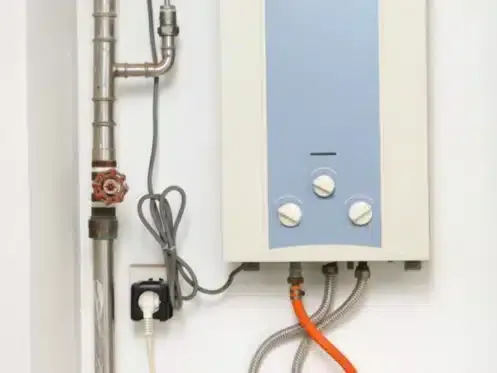
Tankless water heaters, also called on-demand water heaters, have become increasingly popular in Riverside area homes. These heaters differ from conventional tank water heaters in that they don’t store and heat water in an insulated tank—instead, tankless heaters produce hot water on demand.

If you’re wondering how tankless hot water heaters work, you’re not alone. Many people are perplexed at how cold water can enter such a small appliance and come out of it fully heated. The tankless heater houses heating coils to achieve this feat. If the tankless heater uses gas to operate, gas burners will heat the coils. Electric on-demand heaters use electrical resistance coils.

The tankless heater’s simplicity makes it highly efficient without sacrificing heating power. Households that use tankless electric water heaters have a flow rate of 2 to 5 gallons per minute. If you want a higher flow rate, consider installing a tankless gas water heater, as these deliver higher flow rates than their electric counterparts.

A flow rate of 2 to 5 gallons per minute is less than the flow rate of a conventional water heater. However, consider that storage tank water heaters run out of water faster, especially if more than one person uses hot water simultaneously. So, what on-demand heaters lack in flow, they make up for in consistent access to hot water.

Most on-demand water heaters are designed with a control setting on a front-facing panel. This design lets you adjust the gas or electrical value, depending on how the heater’s powered. You can also change the water flow amount and mixing values. Access to this control level is a game-changer for managing one’s utility bills and another reason on-demand water heaters are highly efficient. However, it’s recommended not to make changes frequently. Instead, discuss your water heating and flow preferences with the plumber who installs the appliance.

ELECTRIC VERSUS GAS TANKLESS WATER HEATERS

The tankless water heater you’ll install depends on whether you have electrical or gas hook-ups. If your home is already wired to support an electric water heater, an electric on-demand water heater can give you as much as 99% energy efficiency. Installing an electric water heater is straightforward and relatively uncomplicated for a professional. What’s more, it’s often the cheaper option.

Although all tankless water heaters use energy more efficiently than storage tank water heaters, gas-powered models aren’t as efficient as electric ones. That being the case, they are more powerful than electric water heaters and a better option for larger households.

If you’re converting from electric to gas or vice versa, you’ll need the expertise of a plumber and an electrician. Electricians must ensure the electrical components are handled safely and that your home’s electrical system is never overloaded.

ADVANTAGES OF TANKLESS WATER HEATERS

Now that you know how tankless water heaters work, here are some of the advantages of these water heaters:

  • Instant hot water
  • Longer lifespan
  • Lower monthly costs
  • Better use of space

Access to instant hot water is one of the primary reasons people prefer tankless water heaters. You no longer have to waste water and time waiting for heated water to come out of the tap.

A longer lifespan is another reason to consider a tankless heater. Since on-demand heaters have fewer internal parts and don’t heat water continuously, they don’t experience the same amount of wear and tear as storage tank heaters. On average, tankless water heaters can last up to 20 years compared to an average lifespan for a storage tank water heater of between 10 and 15 years. Tankless water heaters also need fewer repairs, making them even more cost-effective.

As previously mentioned, having access to instant hot water saves you money normally wasted on running the water for several minutes before it thoroughly heats. However, tankless water heaters help you lower your monthly costs in other ways. The most significant way these water heaters save energy is that they don’t heat water continuously, which requires a lot of energy, especially when one is heating water in a 40 to 50-gallon tank.

Smaller households without much space to store a tank water heater find that tankless water heaters fit better. Unlike a storage tank water heater, on-demand water heaters can be installed under sinks, in small utility closets, and even on outside walls in areas where temperatures remain mild all year.

THINGS TO CONSIDER WHEN INSTALLING A TANKLESS WATER HEATER

Is a tankless water heater right for your home? This question is one many homeowners ask when they’re considering making the switch from a traditional tank water heater to an on-demand water heater. It’s a good question because there are differences between the two water-heating appliances. Before making the switch, here are a few things to consider:

  • Your budget
  • Household size
  • Maintenance requirements

WHAT IS YOUR BUDGET?

You might have heard that tankless water heaters are more expensive to install. It’s true—tankless water heaters have higher up-front costs. The unit costs more than most storage tank water heaters, but most of the cost comes from converting from a conventional water heater to an on-demand water heater. Plumbers need to install new systems, so the tankless system fits perfectly in your home. The process involves more labor and parts.

HOW BIG IS YOUR HOUSEHOLD?

Does your home have a large footprint? Are there many people living in the household? Before installing a tankless water heater, you need to consider how many people use water in the house. Large homes might need to install more than one tankless heater to meet hot water needs. For some, this could make a tankless water heater installation too expensive.

MAINTENANCE REQUIREMENTS

All plumbing appliances need a little maintenance, and tankless water heaters are no exception. Mineral buildup is a potential problem in on-demand water heaters, just as with storage tank water heaters. Minerals in hard water, like calcium and magnesium, react to the heat in the unit by creating scale buildup. Over time, the buildup can affect how the water heater functions. To prevent buildup from becoming a problem, you must stay on top of changing the tankless unit’s water filter. Changing the filter regularly not only keeps your home from developing hard water problems, but it also extends the system’s lifespan.

COUNT ON THE PROS

There are some household improvements that you can do yourself, and they make great DIY projects. Installing or repairing a tankless water heater isn’t one of those. You must always rely on the services and experience of local, licensed professionals with the training, skills, and expertise to troubleshoot water heater problems and provide exceptional tankless water heater repair and installation services. If you’re located in or near Riverside, CA, you can rely on our team at Dragonfly Heating & Cooling to help you troubleshoot issues and more! To learn more about tankless water heaters and HVAC services, such as heating and cooling repair, installation, and maintenance call us at Dragonfly Heating & Cooling today!

Air Quality Products That Help Reduce Home Allergens

When it comes to indoor air quality, many people think about outdoor air pollution. However, the quality of the air inside our homes can be just as important – especially for those with allergies or asthma. The concentration of certain pollutants in indoor air can be up to five times higher than in outdoor air. A variety of products on the market can help reduce allergens in your home, giving you and your family relief from allergy symptoms.

AIR CONDITIONERS

Air conditioners work by circulating and filtering the air in your home, which can help to remove pollen, dust, and other allergens from the air. Additionally, using an air conditioner will also keep your home cooler and more comfortable during the warmer months. The amount of filtration depends on the rating of the filter you use.

At Dragonfly Heating & Cooling we offer installation, repair, and maintenance of air conditioners. Our technicians are always available to offer high-quality services to meet your needs. We specialize in Goodman and Daikin products. Just call us to get a free estimate for new equipment installation.

AIR PURIFIERS

Air purifiers work by trapping allergens in filters, allowing only clean air to circulate. Various types of air purifiers are available, so you can choose one that best fits your needs. These devices are commonly used to remove dust, pollen, mold spores, and pet dander from the air, helping to improve air quality.

There are many different types of air purifiers on the market, so choosing one that is right for your needs is essential. Some factors to consider are the specific allergens you are trying to remove, the size of your space, and the features offered. Some pollutants, such as cigarette smoke, chemicals, and odors, are very small and require specialized air purifiers.

Most air purifiers are designed for small rooms or areas of just a few hundred square feet. But you can find larger units or even have a whole-home air purifier installed. When selecting an air purifier, it is also important to consider the features offered. Some units offer additional features such as UV light sanitization, ionization, and timers.

MERV RATING

MERV (Minimum Efficiency Reporting Value) ratings might be listed on air purifiers and filters. MERV is a measure of how effective an air purifier is at removing airborne particles. The higher the MERV rating, the more effective the air purifier will be at removing pollutants from the air.

For most homes, a MERV rating between 11 and 13 should be sufficient. These will catch pollen, dust, mold spores, and exhaust fumes. But if you’re concerned about tobacco smoke or airborne bacteria, you should look for a MERV rating between 13 and 16.

HEPA AIR PURIFIERS

HEPA air filters are some of the most effective at removing allergens from the air. They actually exceed the upper limit of the MERV rating system. HEPA stands for High-Efficiency Particulate Air. These filters can trap 99.97% of particles that are 0.3 microns or larger. This includes many common allergens such as dust, pollen, and pet dander. While this may catch some smoke particles, it may not catch all. Smoke particles can be less than .01 microns.

When shopping for a HEPA air purifier, look for one with a high CADR rating. This stands for “clean air delivery rate” and indicates how well the purifier removes specific types of airborne contaminants. The higher the CADR rating, the better the purifier will be at removing allergens from your indoor air. Contact Dragonfly Heating & Cooling to get more information about the best air purifiers for your home to help you reduce allergens.

HUMIDIFIERS

There are a few different types of humidifiers that can be used to help reduce allergens in the home. Humidifiers can also help reduce the symptoms triggered by allergens by soothing the sinus and nasal cavities.

One type is an ultrasonic humidifier, which uses high-frequency sound waves to create water droplets that are then dispersed into the air. This type of humidifier is generally very quiet and can be used for both small and large rooms.

Another type of humidifier is a cool mist humidifier, which uses a fan to circulate cool air through a water-filled chamber. This type of humidifier can help to reduce the amount of pollen and dust in the air, making it ideal for those with allergies.

Finally, there are warm mist humidifiers, which use heat to generate water vapor that is then dispersed into the air. These types of humidifiers can help to reduce the number of bacteria and mold in the air, making them ideal for those with asthma or other respiratory conditions.

When choosing a humidifier, it is important to consider the size of the room that it will be used in and the type of climate that you live in. Ultrasonic humidifiers are generally best for use in small rooms, while cool mist and warm mist humidifiers are better for larger rooms. If you live in a climate that is dry, it is important to choose a humidifier that can add moisture to the air. Conversely, if you live in a climate that is humid, you may need to look into a dehumidifier.

There are a few things to keep in mind when using a humidifier. First, it is important to clean the humidifier regularly to prevent the growth of bacteria and mold. Second, if you live in an area with hard water, you might want to use distilled water to prevent the buildup of minerals that can damage the humidifier.

VACUUM CLEANERS

If you have carpet in your home, it can be a breeding ground for allergens. Regular vacuuming can help reduce the number of allergens in your carpet. You’ll want to look at units that have onboard HEPA filters.

A robot vacuum can help if you’re looking at daily vacuuming. Robot vacuums are becoming increasingly popular because they’re so convenient. You can schedule them to run whenever you want, even when you’re not home.

You may also want to consider investing in a carpet cleaner that uses hot water to deep clean your carpets and removes allergens. Steam cleaning can help remove bacteria and other allergens that regular vacuuming can’t.

STEAM MOPS

Steam mops use the power of hot water vapor to deep clean surfaces, loosen and lift dirt, and kill germs and bacteria. This makes them ideal for people with allergies or asthma, as they can help remove irritants from your home.

At Dragonfly Heating & Cooling, we provide a full range of air conditioning and heating services in Riverside, CA, including system installation and repair. You can also save money with our maintenance plans. Our highly trained and experienced technicians are equipped to handle any job, big or small. And because we’re a locally owned and operated company, we can offer our customers the personalized service they deserve. Our goal is to provide the best possible service to our clients. No matter your air conditioning or heating needs, Dragonfly Heating & Cooling is here to help. Contact us today to schedule a free consultation.

Top 7 Benefits of Getting Preventative HVAC Maintenance

Many of us rely on an HVAC system to keep us cool in the summer and warm in the winter. With all the use we put these systems through, they can begin to wear and start to work less efficiently over time. This results in higher energy bills, shorter equipment life, and other issues. Fortunately, you can prevent many HVAC-related problems by ensuring that you schedule regular maintenance with a respected company like Dragonfly Heating & Cooling in Riverside. With a well-maintained system, you can enjoy a number of benefits.

1. HVAC MAINTENANCE WILL REDUCE ENERGY COSTS AND USAGE

When you have scheduled maintenance for your HVAC system, it can continue to work in an efficient manner for as long as possible. Having an efficient HVAC system is able to decrease your energy consumption and keep more money in your pocket. In fact, research has shown that regular maintenance can decrease residential energy bills by as much as 30%. These cost-savings alone could be enough to cover the cost of having your system maintained.

2. IMPROVED AIR QUALITY

As your HVAC system operates, dust and other debris can build up on air filters and internal components, as well as in your ducts. During a maintenance visit, an HVAC technician will clean all of these components, change or clean air filters, and inspect your ducts for debris buildup. This means that you will enjoy cleaner indoor air by having regular maintenance. High-quality indoor air is especially important for those with allergies, asthma, or other respiratory conditions.

In between maintenance visits, it’s also important for your to do your part to keep your air clean. This includes regularly changing your air filters. In general, your filters should be changed every 90 days, but you may need to change them more frequently if you have pets or family members who have allergies.

3. LONGER-LASTING HVAC EQUIPMENT

When your HVAC system is maintained, it will last longer. Like any other appliance, your heating and cooling systems experience wear and tear with daily use. This wear and tear can cause your system to work harder than necessary to heat and cool your home. Without maintenance, general wear and tear can become a major issue that can lead to costly repairs and premature breakdowns.

Most people can expect their HVAC system to last around 15 years, but this is only true if you get regular maintenance. Without it, the system’s lifespan may be cut in half. While it costs some money, investing in preventative maintenance can easily save you thousands of dollars in repair and replacement costs.

4. INCREASED COMFORT

Another more noticeable benefit to regular HVAC maintenance is a more comfortable home. In addition to increasing equipment strain, neglecting your maintenance will make it more difficult for your heating and air system to do its job. You may experience hot and cold spots throughout your home or low airflow. These problems are a catch-22 because they often cause you to crank the thermostat up or down, which leads to even more wear and tear and greater inefficiencies. Keeping your system maintained will prevent all of this and help you enjoy a more comfortable indoor environment.

5. MAINTENANCE PROVIDES A SAFER HOME

When you schedule a maintenance visit with Dragonfly Heating & Cooling, our service technicians will conduct a thorough inspection of all system components. They will visually inspect the furnace and air conditioning filters and all hoses and pipes running to your system. They will also check carbon monoxide levels. By having the carbon monoxide levels and gas pipes and fittings checked, your family will have a lower risk of dangerous leaks. This poisoning can occur even if the levels are low. This is why it is important to have maintenance conducted. If any potential issues are uncovered, the tech will provide a repair to keep you and your family safe.

6. REDUCED ENVIRONMENTAL IMPACT

Along with driving up your utility bills, an HVAC system that uses more energy than necessary uses more resources and puts a greater strain on the environment. According to the U.S. Department of Energy, the energy used to heat and cool homes throughout the United States creates twice as many greenhouse gas emissions as cars. So, if you are concerned about climate change and reducing your environmental impact, ensuring that your HVAC system is well maintained should be a top priority.

7. A MORE RELIABLE HVAC SYSTEM

With regular maintenance, you can count on your system to work well whenever you need it to. You also don’t need to be concerned that a major repair or sudden breakdown will occur and set you back thousands of dollars. You can have peace of mind that our maintenance technicians have thoroughly inspected your system and corrected any minor issues that could become major problems.

HOW OFTEN SHOULD YOU SCHEDULE PREVENTATIVE MAINTENANCE?

Now that you have a better understanding of the benefits that regular maintenance provides, you may be wondering when and how often you should schedule an HVAC tune-up. In general, most HVAC technicians and manufacturers recommend that you get at least annual maintenance. However, some manufacturers require twice-annual maintenance visits in order to keep your warranty intact. If you are under an HVAC warranty, it’s important to check the terms to see how often maintenance is required, or you could find yourself paying out of pocket for equipment repairs.

As far as the timing of maintenance visits, spring and fall are generally the best times to schedule an appointment. A spring visit gives your HVAC technicians the chance to look over your furnace after it has been heating your home during the winter and prepare your air conditioner for the upcoming cooling season. The opposite is true of a fall maintenance visit. Summer and winter maintenance visits are not ideal because these are very busy seasons for HVAC technicians, and you may find yourself without heating or cooling while your wait for maintenance to be completed.

SCHEDULE AN APPOINTMENT WITH Dragonfly Heating & Cooling

If it’s time to schedule preventative maintenance or you are interested in learning about the benefits that maintenance provides, Dragonfly Heating & Cooling is available to help. Our team provides comprehensive maintenance services for heating and cooling systems. We even offer a maintenance plan to help take the guesswork out of keeping your system maintained. In addition to annual tune-ups, members of our maintenance plan receive HVAC cleaning and inspections, and free refrigerant top-offs. If repairs are needed, members also receive free diagnostic services and a 10% to 15% discount on the repair.

Along with maintenance, Dragonfly Heating & Cooling installs and repairs furnaces and air conditioners. We are highly skilled in installing, repairing, and maintaining ductless heating and cooling systems as well. If you are considering investing in a new system, ask us about the financing services that we offer customers with approved credit. We also offer regular specials to help you save on HVAC services throughout the year. To find out more about our services or to set up an appointment, reach out to our friendly team today.

Schedule Service

"*" indicates required fields

This field is for validation purposes and should be left unchanged.
Are you a new customer?*

By clicking “Send Message”, I am providing express written consent to receive autodialed and pre-recorded calls, texts, and SMS/MMS with marketing communications from Dragonfly Heating and Cooling regarding home services at the phone number provided above, even if the number is on a corporate, state, or national Do Not Call list. Consent is not a condition to purchase services or products.